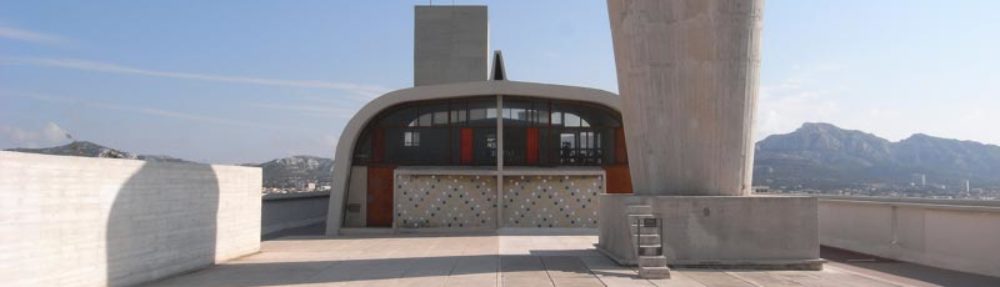
This is the title of the current temporary exhibition (until sept. 16) at La Cité de l’Architecture et du Patrimoine. The exhibition consists of 150 short films about architecture presented across a continuous sweep of 24 projections. These span the entire length of the north wing of the Palais de Chaillot, the monumental modernist/classical building that houses the museum and that sits on the Seine directly opposite the Eiffel Tower. Watching the films is in itself an exercise in perpetual montage as even the most attentive viewer is invariably drawn to another screen when their interest wanders from the program they are watching. Perhaps it should be subtitled, one never-ending film about architecture that you cut yourself. After spending a few hours in the exhibition I set about making a list of ways that the filmmakers had addressed the problem of representing architecture. What conventions and strategies (filmic, conceptual or otherwise) are employed to render and translate the lived 3D environment as film?
supplementary image sources:
- archival still images
- archival film footage
- conceptually related (perhaps) footage from narrative films
- media sourced footage (tv shows, documentaries etc)
- stock images and footage
camera techniques:
- tracking shots, dolly shots
- panning
- 1st person POV (steadycam etc)
- mobile camera (vehicle, helicopter etc.)
- time lapse
- variations in lighting (time of day etc)
post techniques:
- transitions (dissolves, wipes, fades)
- superimposition
- image masking (time based reveals etc)
- spatial montage (split screen, image in image)
use of the human figure:
- occupying/operating in space (working, relaxing etc)
- historical signifier (through costume and look)
- guide to scale
soundtrack:
- atmos
- dialogue
- voice over
- music, classical
- music, electronic
- sound assembalge